by codm | Jan 18, 2023 | Newsletter
Highlights Include an Update from the Dose Escalation Part of a Phase 1 Study Evaluating the Novel Anticancer Agent, E7386, in Advanced Solid Tumors Including Colorectal Cancer
Research from the LEAP (LEnvatinib And Pembrolizumab) Clinical Program May Provide New Information About Treating Patients with Unresectable Hepatocellular Carcinoma
For Print (138KB)
Eisai Co., Ltd. (Headquarters: Tokyo, CEO: Haruo Naito, “Eisai”) announced today the presentation of research across various types of gastrointestinal cancers during the 2023 American Society of Clinical Oncology (ASCO) Gastrointestinal Cancers Symposium (#GI23), which is taking place in-person in San Francisco, California and virtually from January 19-21.
Notable data include an update from the dose-escalation part of a Phase 1 Study evaluating E7386*1, a CREB-binding protein (CBP) / β-catenin interaction inhibitor, in patients with advanced solid tumors including colorectal cancer (NCT03833700; Abstract: #106). Based on these additional analyses, further investigation of safety, preliminary efficacy, pharmacokinetics and biomarker analyses of E7386 is ongoing using two dose levels in the expansion part.
Research from the LEAP (LEnvatinib And Pembrolizumab) clinical program includes a poster presentation featuring a health-related quality of life analysis from the Phase 3 LEAP-002 trial investigating the lenvatinib (LENVIMA®) plus pembrolizumab (KEYTRUDA®*2) combination versus lenvatinib plus placebo as a first-line treatment for patients with unresectable hepatocellular carcinoma (NCT03713593; Abstract: #506). Additional presentations on Eisai’s oncology pipeline showcase Eisai’s investigational compound, E7389-LF, a new liposomal formulation of eribulin, in combination with nivolumab in patients with solid tumors. Efficacy and safety were evaluated in expansion cohorts, including an esophageal cancer cohort (NCT04078295; Abstract: #337) and a gastric cancer cohort (NCT04078295; Abstract: #339).
“We are eager to share new data at the annual symposium where specialists in gastrointestinal cancers gather from all over the world, including findings from a Phase 1 study evaluating the novel investigational anticancer agent, E7386, in advanced solid tumors including colorectal cancer,” said Dr. Takashi Owa, Chief Scientific Officer, Senior Vice President, Eisai Co., Ltd. “Our findings across colorectal, esophageal, gastric and liver cancer illustrate Eisai’s commitment to further oncology research for people living with gastrointestinal cancers, who account for over one quarter of the global cancer incidence1.”
In March 2018, Eisai and Merck (known as MSD outside the United States and Canada), through an affiliate, entered into a strategic collaboration for the worldwide co-development and co-commercialization of lenvatinib, both as monotherapy and in combination with Merck’s anti-PD-1 therapy pembrolizumab. To date, more than 10 trials have been initiated under the LEAP clinical program, which is evaluating the combination across multiple tumor types.
This release discusses investigational compounds and investigational uses for FDA-approved products. It is not intended to convey conclusions about efficacy and safety. There is no guarantee that any investigational compounds or investigational uses of FDA-approved products will successfully complete clinical development or gain FDA approval.
The full list of Eisai presentations is included below. The majority of abstracts are currently available on the ASCO website. The late-breaking abstracts will be released at the time of presentation during the symposium.
| Cancer Type |
Study/ Compound |
Abstract Title |
Abstract Type & Details (Pacific Standard Time) |
| Pipeline |
| Solid Tumors |
E7386 |
A phase 1 study of E7386, a CREB-binding protein (CBP)/β-catenin interaction inhibitor, in patients (pts) with advanced solid tumors including colorectal cancer: updated dose-escalation part |
Poster Presentation
Abstract #106
January 21, 2023
6:30-7:55 AM
|
| E7389-LF |
Gastric cancer (GC) cohort of a phase 2 trial of E7389-LF (liposomal formulation of eribulin) in combination with nivolumab |
Poster Presentation
Abstract #339
January 19, 2023
12:00-1:30 PM
|
| E7389-LF |
The esophageal cancer cohort of a phase 2 trial of E7389‐LF (liposomal formulation of eribulin) + nivolumab |
Poster Presentation
Abstract #337
January 19, 2023
12:00-1:30 PM
|
| LEAP clinical program |
| Gastrointestinal Cancers |
LEAP-015 |
First-line lenvatinib plus pembrolizumab plus chemotherapy versus chemotherapy in advanced/metastatic gastroesophageal adenocarcinoma: (LEAP-015): Safety run-in results (Encore presentation) |
Poster Presentation
Abstract #411
January 19, 2023
12:00-1:30 PM
|
| LEAP-002 |
Health-related quality of life (HRQoL) impact of lenvatinib (len) plus pembrolizumab (pembro) versus len plus placebo (pbo) as first-line (1L) therapy for advanced hepatocellular carcinoma (aHCC): Phase 3 LEAP-002 study |
Poster Presentation
Abstract #506
January 20, 2023
12:00-1:30 PM
|
| Real World Evidence |
| Gastrointestinal Cancer |
Real-world data |
Prevalence of historical medical conditions or comorbidities with potential role in clinical decision making related to suitability of immuno-oncologic plus IV antiangiogenic therapy in newly diagnosed first-line unresectable hepatocellular carcinoma in the United States |
Poster Presentation
Presentation #511
January 20, 2023
12:00-1:30 PM
|
Media Inquiries:
Public Relations Department,
Eisai Co., Ltd.
+81-(0)3-3817-5120
[Notes to editors]
1. Eisai’s Focus on Cancer
Eisai focuses on the development of anticancer drugs, targeting the tumor microenvironment (with experience and knowledge from existing in-house discovered compounds) and the driver gene mutation and aberrant splicing (leveraging RNA Splicing Platform) as areas (Ricchi) where real patient needs are still unmet, and where Eisai can aim to become a frontrunner in oncology. Eisai aspires to discover innovative new drugs with new targets and mechanisms of action from these Ricchi, with the aim of contributing to the cure of cancers.
*1 E7386 is created through collaboration research between Eisai and PRISM BioLab Co., Ltd. (Headquarters: Kanagawa)
*2 KEYTRUDA® is a registered trademark of Merck Sharp & Dohme LLC., a subsidiary of Merck & Co., Inc., Rahway, N.J., U.S.A.
by codm | Jan 16, 2023 | Newsletter
For Print (232KB)
TOKYO and CAMBRIDGE, Mass., January 16, 2023 – Eisai Co., Ltd. (Headquarters: Tokyo, CEO: Haruo Naito, “Eisai”) and Biogen Inc. (Nasdaq: BIIB, Corporate headquarters: Cambridge, Massachusetts, CEO: Christopher A. Viehbacher, “Biogen”) announced today that Eisai has submitted a marketing authorization application for lecanemab (Brand Name in the U.S.: LEQEMBI™), an investigational anti-amyloid beta (Aβ) protofibril1 antibody for the treatment of mild cognitive impairment (MCI) due to Alzheimer’s disease (AD) and mild AD dementia (collectively known as early AD) with confirmed presence of amyloid pathology in the brain to the Pharmaceuticals and Medical Devices Agency (PMDA).
This application is based on the results of the Phase III Clarity AD study and Phase IIb clinical study (Study 201), which demonstrated the lecanemab treatment showed a reduction of clinical decline in early AD. Prior to submitting this application, Eisai utilized the prior assessment consultation system of PMDA, with the aim of shortening the review period for lecanemab.
In the Clarity AD study, lecanemab treatment resulted in highly statistically significant results, reducing clinical decline on the global cognitive and functional scale as the primary endpoint (CDR-SB2: Clinical Dementia Rating-Sum of Boxes) as early as six months, and over time across all time points. All key secondary endpoints also showed highly statistically significant results. Especially, treatment with lecanemab showed a statistically significant reduction in amyloid plaque burden at all timepoints starting at 3 months in the amyloid PET study and statistically significantly slowed decline of activities of daily living on ADCS MCI-ADL3. The most common adverse events (>10%) in the lecanemab group were infusion reactions, ARIA-H (combined cerebral microhemorrhages, cerebral macrohemorrhages, and superficial siderosis), ARIA-E (edema/effusion), headache, and fall.
In November 2022, the results of Clarity AD study were presented at the 15th Clinical Trials on Alzheimer’s Disease (CTAD) conference and simultaneously published in the peer-reviewed medical journal the New England Journal of Medicine.
In the U.S., lecanemab was granted accelerated approval as a treatment for AD by the U.S. Food and Drug Administration (FDA) on January 6, 2023. On the same day, Eisai submitted a Supplemental Biologics License Application (sBLA) to the FDA for approval under the traditional pathway. In Europe, Eisai submitted marketing authorization application (MAA) to the European Medicines Agency (EMA) on January 9, 2023. In China, Eisai initiated submission of data for BLA to the National Medical Products Administration (NMPA) of China in December 2022.
Eisai serves as the lead of lecanemab development and regulatory submissions globally with both Eisai and Biogen co-commercializing and co-promoting the product and Eisai having final decision-making authority.
This release discusses investigational uses of an agent in development and is not intended to convey conclusions about efficacy or safety. There is no guarantee that such an investigational agent will successfully gain health authority approval.
Media Contacts:
Investor Contacts:
| Eisai Co., Ltd. |
Biogen Inc. |
Investor Relations Department
|
Mike Hencke
|
1. INDICATION, DOSAGE AND ADMINISTRATION, AND IMPORTANT SAFETY INFORMATION IN THE U.S
INDICATION
LEQEMBI is indicated for the treatment of Alzheimer’s disease. Treatment with LEQEMBI should be initiated in patients with mild cognitive impairment or mild dementia stage of disease, the population in which treatment was initiated in clinical trials. There are no safety or effectiveness data on initiating treatment at earlier or later stages of the disease than were studied. This indication is approved under accelerated approval based on reduction in amyloid beta plaques observed in patients treated with LEQEMBI. Continued approval for this indication may be contingent upon verification of clinical benefit in a confirmatory trial.
IMPORTANT SAFETY INFORMATION
WARNINGS AND PRECAUTIONS
Amyloid Related Imaging Abnormalities
LEQEMBI can cause amyloid related imaging abnormalities-edema (ARIA-E) and -hemosiderin deposition (ARIA-H). ARIA-E can be observed on MRI as brain edema or sulcal effusions, and ARIA-H as microhemorrhage and superficial siderosis. ARIA is usually asymptomatic, although serious and life-threatening events, including seizure and status epilepticus, rarely can occur. Reported symptoms associated with ARIA may include headache, confusion, visual changes, dizziness, nausea, and gait difficulty. Focal neurologic deficits may also occur. Symptoms associated with ARIA usually resolve over time.
ARIA Monitoring and Dose Management Guidelines
- Obtain recent (within one year) brain magnetic resonance imaging (MRI) prior to initiating treatment with LEQEMBI. Obtain an MRI prior to the 5th, 7th, and 14th infusions.
- Recommendations for dosing in patients with ARIA-E and ARIA-H depend on clinical symptoms and radiographic severity. Depending on ARIA severity, use clinical judgment in considering whether to continue dosing, temporarily discontinue treatment, or permanently discontinue LEQEMBI.
- Enhanced clinical vigilance for ARIA is recommended during the first 14 weeks of treatment with LEQEMBI. If a patient experiences symptoms suggestive of ARIA, clinical evaluation should be performed, including MRI if indicated. If ARIA is observed on MRI, careful clinical evaluation should be performed prior to continuing treatment.
- There is no experience in patients who continued dosing through symptomatic ARIA-E or through asymptomatic, but radiographically severe, ARIA-E. There is limited experience in patients who continued dosing through asymptomatic but radiographically mild to moderate ARIA-E. There are limited data in dosing patients who experienced recurrent ARIA-E.
Incidence of ARIA
- In Study 1 (Study 201), symptomatic ARIA occurred in 3% (5/161) of LEQEMBI-treated patients. Clinical symptoms associated with ARIA resolved in 80% of patients during the period of observation.
- Including asymptomatic cases, ARIA was observed in LEQEMBI: 12% (20/161); placebo: 5% (13/245). ARIA-E was observed in LEQEMBI: 10% (16/161); placebo: 1% (2/245). ARIA-H was observed in LEQEMBI: 6% (10/161); placebo: 5% (12/245). There was no increase in isolated ARIA-H for LEQEMBI compared to placebo.
- Intracerebral hemorrhage >1 cm in diameter was reported after one treatment in LEQEMBI: 1 patient; placebo: zero patients. Events of intracerebral hemorrhage, including fatal events, in patients taking LEQEMBI have also been reported in other studies.
Apolipoprotein E ε4 (ApoE ε4) Carrier Status and Risk of ARIA
- In Study 1, 6% (10/161) of patients in the LEQEMBI group were ApoE ε4 homozygotes, 24% (39/161) were heterozygotes, and 70% (112/161) were noncarriers.
- The incidence of ARIA was higher in ApoE ε4 homozygotes than in heterozygotes and noncarriers among patients treated with LEQEMBI. Of the 5 LEQEMBI-treated patients who had symptomatic ARIA, 4 were ApoE ε4 homozygotes, 2 of whom experienced severe symptoms. An increased incidence of symptomatic and overall ARIA in ApoE ε4 homozygotes compared to heterozygotes and noncarriers in LEQEMBI-treated patients has been reported in other studies.
- The recommendations on management of ARIA do not differ between ApoE ε4 carriers and noncarriers.
- Consider testing for ApoE ε4 status to inform the risk of developing ARIA when deciding to initiate treatment with LEQEMBI.
Radiographic Findings
- The majority of ARIA-E radiographic events occurred early in treatment (within the first 7 doses), although ARIA can occur at any time and patients can have more than 1 episode. The maximum radiographic severity of ARIA-E in patients treated with LEQEMBI was mild in 4% (7/161) of patients, moderate in 4% (7/161) of patients, and severe in 1% (2/161) of patients. Resolution on MRI occurred in 62% of ARIA-E patients by 12 weeks, 81% by 21 weeks, and 94% overall after detection. The maximum radiographic severity of ARIA-H microhemorrhage in patients treated with LEQEMBI was mild in 4% (7/161) of patients and severe in 1% (2/161) of patients; 1 of the 10 patients with ARIA-H had mild superficial siderosis.
Concomitant Antithrombotic Medication and Other Risk Factors for Intracerebral Hemorrhage
- Patients were excluded from enrollment in Study 1 for baseline use of anticoagulant medications. Antiplatelet medications such as aspirin and clopidogrel were allowed. If anticoagulant medication was used because of intercurrent medical events that required treatment for ≤4 weeks, treatment with LEQEMBI was to be temporarily suspended.
- Most exposures to antithrombotic medications were to aspirin; few patients were exposed to other antiplatelet drugs or anticoagulants, limiting any meaningful conclusions about the risk of ARIA or intracerebral hemorrhage in patients taking other antiplatelet drugs or anticoagulants. Because intracerebral hemorrhages >1 cm in diameter have been observed in patients taking LEQEMBI, additional caution should be exercised when considering the administration of antithrombotics or a thrombolytic agent (e.g., tissue plasminogen activator) to a patient already being treated with LEQEMBI.
- Patients were excluded from enrollment in Study 1 for the following risk factors for intracerebral hemorrhage: prior cerebral hemorrhage >1 cm in greatest diameter, more than 4 microhemorrhages, superficial siderosis, evidence of vasogenic edema, evidence of cerebral contusion, aneurysm, vascular malformation, infective lesions, multiple lacunar infarcts or stroke involving a major vascular territory, and severe small vessel or white matter disease. Caution should be exercised when considering the use of LEQEMBI in patients with these risk factors.
Infusion-Related Reactions
- Infusion-related reactions were observed in LEQEMBI: 20% (32/161); placebo: 3% (8/245), and the majority of cases in LEQEMBI-treated patients (88%, 28/32) occurred with the first infusion. All infusion-related reactions were mild (56%) or moderate (44%) in severity. Infusion-related reactions resulted in discontinuations in 2% (4/161) of patients treated with LEQEMBI. Symptoms of infusion-related reactions included fever and flu-like symptoms (chills, generalized aches, feeling shaky, and joint pain), nausea, vomiting, hypotension, hypertension, and oxygen desaturation.
- After the first infusion, 38% of LEQEMBI-treated patients had transient decreased lymphocyte counts to <0.9 x10⁹/L compared to 2% on placebo, and 22% of LEQEMBI-treated patients had transient increased neutrophil counts to >7.9 x10⁹/L compared to 1% on placebo.
- In the event of an infusion-related reaction, the infusion rate may be reduced, or the infusion may be discontinued, and appropriate therapy initiated as clinically indicated. Prophylactic treatment with antihistamines, acetaminophen, nonsteroidal anti-inflammatory drugs, or corticosteroids prior to future infusions may be considered.
ADVERSE REACTIONS
- In Study 1, 15% of LEQEMBI-treated patients, compared to 6% of placebo-treated patients, stopped study treatment because of an adverse reaction. The most common adverse reaction leading to discontinuation of LEQEMBI was infusion-related reactions that led to discontinuation in 2% (4/161) of patients treated with LEQEMBI compared to 1% (2/245) of patients on placebo.
- The most common adverse reactions reported in ≥5% of patients treated with LEQEMBI (N=161) and ≥2% higher than placebo (N=245) in Study 1 were infusion-related reactions (LEQEMBI: 20%; placebo: 3%), headache (LEQEMBI: 14%; placebo: 10%), ARIA-E (LEQEMBI: 10%; placebo: 1%), cough (LEQEMBI: 9%; placebo: 5%), and diarrhea (LEQEMBI: 8%; placebo: 5%).
Please see full Prescribing Information in the U.S.
2. About Lecanemab
Lecanemab (Brand Name in the U.S.: LEQEMBI™) is the result of a strategic research alliance between Eisai and BioArctic. Lecanemab is a humanized immunoglobulin gamma 1 (IgG1) monoclonal antibody directed against aggregated soluble (protofibril) and insoluble forms of amyloid-beta (Aβ). In the U.S., LEQEMBI was granted accelerated approval by the U.S. Food and Drug Administration (FDA) on January 6, 2023. LEQEMBI is indicated for the treatment of Alzheimer’s disease (AD) in the U.S. Treatment with LEQEMBI should be initiated in patients with mild cognitive impairment or mild dementia stage of disease, the population in which treatment was initiated in clinical trials. There are no safety or effectiveness data on initiating treatment at earlier or later stages of the disease than were studied. This indication is approved under accelerated approval based on reduction in Aβ plaques observed in patients treated with LEQEMBI. Continued approval for this indication may be contingent upon verification of clinical benefit in a confirmatory trial. Eisai submitted a Supplemental Biologics License Application (sBLA) to the FDA for approval under the traditional pathway on January 6, 2023. In Europe, Eisai submitted marketing authorization application (MAA) to the European Medicines Agency (EMA) on January 9, 2023. In China, Eisai initiated submission of data for BLA to the National Medical Products Administration (NMPA) of China in December 2022.
Eisai has completed lecanemab subcutaneous bioavailability study, and subcutaneous dosing is currently being evaluated in the Clarity AD OLE.
Since July 2020 the Phase 3 clinical study (AHEAD 3-45) for individuals with preclinical AD, meaning they are clinically normal and have intermediate or elevated levels of amyloid in their brains, is ongoing. AHEAD 3-45 is conducted as a public-private partnership between the Alzheimer’s Clinical Trial Consortium that provides the infrastructure for academic clinical trials in AD and related dementias in the U.S, funded by the National Institute on Aging, part of the National Institutes of Health, Eisai and Biogen.
Since January 2022, the Tau NexGen clinical study for Dominantly Inherited AD (DIAD), that is conducted by Dominantly Inherited Alzheimer Network Trials Unit (DIAN-TU), led by Washington University School of Medicine in St. Louis, is ongoing.
3. About Phase IIb (Study 201) study and Phase III Clarity AD study
Phase IIb clinical study (Study 201) was conducted as a double-blind, parallel-group, dose-finding study of lecanemab or placebo for 18 months in 856 people living with early AD (34 of whom were Japanese). Lecanemab treatment resulted in a dose-dependent, longitudinal, and significant reduction in PET SUVR, which assesses amyloid-β accumulation in the brain, compared to placebo. At 18 months, ADCOMS4, CDR-SB, and ADAS-cog145 showed a dose-dependent reducing clinical decline, with suppression rates of 29.7%, 26.5%, and 47.2% in the 10 mg/kg bi-weekly treatment, respectively. The study did not achieve its primary outcome measure6 at 12 months of treatment. The most common adverse events occurring in the 10 mg/kg biweekly group (incidence ≥ 5% and more frequent than in the placebo group) were infusion reactions (19.9%), headache (13.7%), ARIA-E (9.9%), cough (8.7%), diarrhea (8.1%), dizziness (7.5%), microhemorrhages (5.6%).
Phase III Clarity AD study was conducted as a placebo-controlled, double-blind, parallel-group, randomized study of lecanemab 10 mg/kg or placebo administered bi-weekly for 18 months in 1,795 people living with early AD (152 of whom were Japanese). Mean change of CDR-SB from baseline at 18 months as the primary endpoint was 1.21 and 1.66 for lecanemab and placebo groups, respectively. Lecanemab treatment resulted in highly statistically significant results, reducing clinical decline on the global cognitive and functional scale, compared with placebo at 18 months by -0.45 (95% Confidence Interval (CI): -0.67, -0.23; P=0.00005), representing a 27% slowing of decline. Starting as early as six months (difference: -0.17 [95% CI: -0.29, -0.05]; P<0.01), and increasing in absolute difference over time across all time points every 3 months, the treatment showed highly statistically significant changes in CDR-SB from baseline compared to placebo (all p-values are less than 0.01).
All key secondary endpoints, amyloid Positron Emission Tomography (PET) using Centiloids, ADAS-Cog14, ADCOMS and ADCS MCI-ADL, also showed highly statistically significant results compared with placebo (P<0.001).
The most common adverse events (>10%) in the lecanemab group were infusion reactions (lecanemab: 26.4%; placebo: 7.4%), ARIA-H (combined cerebral microhemorrhages, cerebral macrohemorrhages, and superficial siderosis; lecanemab: 17.3%; placebo: 9.0%), ARIA-E (edema/effusion; lecanemab: 12.6%; placebo: 1.7%), headache (lecanemab: 11.1%; placebo: 8.1%), and fall (lecanemab: 10.4%; placebo: 9.6%). Infusion reactions were largely mild-to-moderate (grade 1-2: 96%) and occurred on the first dose (75%).
During the study period, deaths occurred in 0.7% and 0.8% of participants in the lecanemab and placebo groups, respectively and no deaths were related to lecanemab or occurred with amyloid-related imaging abnormalities (ARIA) in 18-month double-blind study period. Serious adverse events were experienced by 14.0% of participants in the lecanemab group and 11.3% of participants in the placebo group. Treatment-emergent adverse events occurred in 88.9% and 81.9% of participants in the lecanemab and placebo groups, respectively. Treatment-emergent adverse events leading to drug withdrawal occurred in 6.9% and 2.9% of participants in the lecanemab and placebo groups, respectively.
Overall, lecanemab’s ARIA incidence profile was within expectations based on the Phase 2 trial results. ARIA-E events were largely mild-to-moderate radiographically (91% of those who had ARIA-E), asymptomatic (78% of those who had ARIA-E), occurred within the first 3 months of treatment (71% of those who had ARIA-E) and resolved within 4 months of detection (81% of those who had ARIA-E). Among the 2.8% of lecanemab-treated subjects with symptomatic ARIA-E, the most commonly reported symptoms were headache, visual disturbance, and confusion. The incidence of symptomatic ARIA-H was 0.7% in the lecanemab group and 0.2% in the placebo group. No imbalance was observed in isolated ARIA-H (i.e., ARIA-H in participants who did not also experience ARIA-E) between lecanemab (8.9%) and placebo (7.8%).
4. About the Collaboration between Eisai and Biogen for AD
Eisai and Biogen have been collaborating on the joint development and commercialization of AD treatments since 2014. Eisai serves as the lead of lecanemab development and regulatory submissions globally with both companies co-commercializing and co-promoting the product and Eisai having final decision-making authority.
5. About the Collaboration between Eisai and BioArctic for AD
Since 2005, Eisai and BioArctic have had a long-term collaboration regarding the development and commercialization of AD treatments. Eisai obtained the global rights to study, develop, manufacture and market lecanemab for the treatment of AD pursuant to an agreement with BioArctic in December 2007. The development and commercialization agreement on the antibody lecanemab back-up was signed in May 2015.
6. About Eisai Co., Ltd.
Eisai’s Corporate Concept is “to give first thought to patients and people in the daily living domain, and to increase the benefits that health care provides.” Under this Concept (also known as human health care (hhc) Concept), we aim to effectively achieve social good in the form of relieving anxiety over health and reducing health disparities. With a global network of R&D facilities, manufacturing sites and marketing subsidiaries, we strive to create and deliver innovative products to target diseases with high unmet medical needs, with a particular focus in our strategic areas of Neurology and Oncology.
In addition, we demonstrate our commitment to the elimination of neglected tropical diseases (NTDs), which is a target (3.3) of the United Nations Sustainable Development Goals (SDGs), with working on various activities together with global partners.
For more information about Eisai, please visit www.eisai.com (for global headquarters: Eisai Co., Ltd.), and connect with us on Twitter @Eisai_SDGs.
7. About Biogen
As pioneers in neuroscience, Biogen discovers, develops, and delivers worldwide innovative therapies for people living with serious neurological diseases as well as related therapeutic adjacencies. One of the world’s first global biotechnology companies, Biogen was founded in 1978 by Charles Weissmann, Heinz Schaller, Sir Kenneth Murray, and Nobel Prize winners Walter Gilbert and Phillip Sharp. Today, Biogen has a leading portfolio of medicines to treat multiple sclerosis, has introduced the first approved treatment for spinal muscular atrophy, and developed the first approved treatment to address a defining pathology of Alzheimer’s disease. Biogen is also commercializing biosimilars and focusing on advancing one of the industry’s most diversified pipelines in neuroscience that will transform the standard of care for patients in several areas of high unmet need.
We routinely post information that may be important to investors on our website at www.biogen.com. Follow us on social media – Twitter, LinkedIn, Facebook, YouTube.
1Protofibrils are large Aβ aggregated soluble species of 75-500 Kd.
2CDR-SB is a numeric scale used to quantify the various severity of symptoms of dementia. Based on interviews of people living with AD and family/caregivers, qualified healthcare professionals assess cognitive and functional performance in six areas: memory, orientation, judgment and problem solving, community affairs, home and hobbies, and personal care. The total score of the six areas is the score of CDR-SB, and CDR-SB is also used as an appropriate item for evaluating the effectiveness of therapeutic drugs targeting the early stages of AD.
3ADCS MCI-ADL assesses the competence of patients with MCI in activities of daily living (ADLs), based on 24 questions to the patient’s partner about actual recent activities of daily living.
4ADCOMS is developed by Eisai, ADCOMS combines items from the ADAS-Cog scale for assessing cognitive functions, MMSE and the CDR scale for evaluating the severity of dementia to enable highly sensitive detection of changes in clinical functions of early AD symptoms and changes in memory
5ADAS-Cog is the most common cognitive assessment instrument used in AD clinical trials all over the world. ADAS-Cog14 consists of 14 competencies: word recall, commands, constructional praxis, object and finger naming, ideational praxis, orientation, word recognition, remembering word recognition instructions, comprehension of spoken language, word finding difficulty, spoken language ability, delayed word recall, number cancellation, and maze task. ADAS-Cog has been used in clinical trials for earlier stages of AD including MCI.
6An 80% or higher estimated probability of demonstrating 25% or greater slowing in clinical decline at 12 months treatment measured by ADCOMS from baseline compared to placebo.
Biogen Safe Harbor
This news release contains forward-looking statements, including statements made pursuant to the safe harbor provisions of the Private Securities Litigation Reform Act of 1995, about the potential clinical effects of lecanemab; the potential benefits, safety and efficacy of lecanemab; potential regulatory discussions, submissions and approvals and the timing thereof; the treatment of Alzheimer’s disease; the anticipated benefits and potential of Biogen’s collaboration arrangements with Eisai; the potential of Biogen’s commercial business and pipeline programs, including lecanemab; and risks and uncertainties associated with drug development and commercialization. These statements may be identified by words such as “aim,” “anticipate,” “believe,” “could,” “estimate,” “expect,” “forecast,” “intend,” “may,” “plan,” “possible,” “potential,” “will,” “would” and other words and terms of similar meaning. Drug development and commercialization involve a high degree of risk, and only a small number of research and development programs result in commercialization of a product. Results in early-stage clinical studies may not be indicative of full results or results from later stage or larger scale clinical studies and do not ensure regulatory approval. You should not place undue reliance on these statements or the scientific data presented.
These statements involve risks and uncertainties that could cause actual results to differ materially from those reflected in such statements, including without limitation unexpected concerns that may arise from additional data, analysis or results obtained during clinical studies, including the Clarity AD clinical trial and AHEAD 3-45 study; the occurrence of adverse safety events; risks of unexpected costs or delays; the risk of other unexpected hurdles; regulatory submissions may take longer or be more difficult to complete than expected; regulatory authorities may require additional information or further studies, or may fail or refuse to approve or may delay approval of Biogen’s drug candidates, including lecanemab; actual timing and content of submissions to and decisions made by the regulatory authorities regarding lecanemab; uncertainty of success in the development and potential commercialization of lecanemab; failure to protect and enforce Biogen’s data, intellectual property and other proprietary rights and uncertainties relating to intellectual property claims and challenges; product liability claims; third party collaboration risks; and the direct and indirect impacts of the ongoing COVID-19 pandemic on Biogen’s business, results of operations and financial condition. The foregoing sets forth many, but not all, of the factors that could cause actual results to differ from Biogen’s expectations in any forward-looking statement. Investors should consider this cautionary statement as well as the risk factors identified in Biogen’s most recent annual or quarterly report and in other reports Biogen has filed with the U.S. Securities and Exchange Commission. These statements are based on Biogen’s current beliefs and expectations and speak only as of the date of this news release. Biogen does not undertake any obligation to publicly update any forward-looking statements, whether as a result of new information, future developments or otherwise.
For Print (232KB)
by codm | Jan 13, 2023 | Newsletter
For Print (195KB)
Eisai Co., Ltd. (Headquarters: Tokyo, CEO: Haruo Naito, “Eisai”) announced that it has renewed the Sustainability page of its corporate website and it is now accessible to the public.
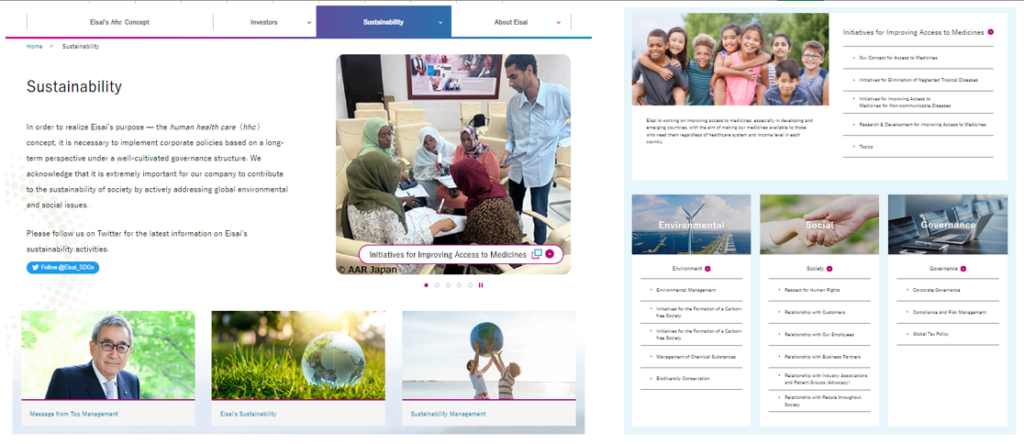
Sustainability Top Page
https://www.eisai.com/sustainability/index.html
The Eisai’s Corporate Concept is “to give first thought to patients and the people in the daily living domain, and to increase the benefits that health care provides to them”. Under this Concept (also known as human health care (hhc) Concept), we aim to effectively achieve social good in the form of relieving anxiety over health and reducing health disparities. For realizing our corporate concept, it is necessary to implement corporate measures based on a long-term perspective under a well-cultivated governance structure. Therefore, it is extremely important for our company to contribute to the sustainability of society by actively addressing global environmental and social issues.
In order to provide information about our sustainability approach and activities in an easy-to-understand manner, we have enhanced the content, and renewed the key visuals, design and page structure. We have also featured our approach, targets and initiatives for improving access to medicines, which Eisai is focusing on, as well as the areas of environment, society and governance.
Through further efforts in our proactive disclosure of information for sustainability, we will aim to develop and maintain favorable relations with all of our stakeholders.
Media Inquiries:
Public Relations Department,
Eisai Co., Ltd.
+81-(0)3-3817-5120
For Print (195KB)
by codm | Jan 11, 2023 | Newsletter
For Print (192KB)
TOKYO and CAMBRIDGE, Mass., January 11, 2023 – Eisai Co., Ltd. (Headquarters: Tokyo, CEO: Haruo Naito, “Eisai”) and Biogen Inc. (Nasdaq: BIIB, Corporate headquarters: Cambridge, Massachusetts, CEO: Christopher A. Viehbacher, “Biogen”) announced today that Eisai has submitted a marketing authorization application (MAA) for lecanemab (Brand Name in the U.S.: LEQEMBI™), an investigational anti-amyloid beta (Aβ) protofibril antibody, for the treatment of early Alzheimer’s disease (mild cognitive impairment due to Alzheimer’s disease (AD) and mild AD dementia) to the European Medicines Agency (EMA). This application is based on the results of the Phase III Clarity AD study and the Phase IIb clinical study (Study 201), which demonstrated that lecanemab treatment showed a reduction of clinical decline in early AD, and is subject to a validation to determine whether the EMA accepts the application for review.
The Clarity AD study met its primary endpoint (CDR-SB1: Clinical Dementia Rating-Sum of Boxes) and all key secondary endpoints with highly statistically significant results. The most common adverse events (>10%) in the lecanemab group were infusion reactions, ARIA-H (combined cerebral microhemorrhages, cerebral macrohemorrhages, and superficial siderosis), ARIA-E (edema/effusion), headache, and fall.
In November 2022, the results of the Clarity AD study were presented at the 2022 Clinical Trials on Alzheimer’s Disease (CTAD) conference, and simultaneously published in the New England Journal of Medicine, peer-reviewed medical journals.
In the U.S., lecanemab was granted accelerated approval as a treatment for AD by the U.S. Food and Drug Administration (FDA) on January 6, 2023. Eisai submitted a Supplemental Biologics License Application (sBLA) to the FDA for approval under the traditional pathway on the same day. In China, Eisai has initiated submission of data for BLA to the National Medical Products Administration (NMPA) of China in December 2022. In Japan, Eisai plans to submit a marketing authorization application by the end of Eisai’s fiscal year 2022, which ends March 31, 2023.
Eisai serves as the lead of lecanemab development and regulatory submissions globally with both Eisai and Biogen co-commercializing and co-promoting the product and Eisai having final decision-making authority.
1 CDR-SB is a numeric scale used to quantify the various severity of symptoms of dementia. Based on interviews of people living with AD and family/caregivers, qualified healthcare professionals assess cognitive and functional performance in six areas: memory, orientation, judgment and problem solving, community affairs, home and hobbies, and personal care. The total score of the six areas is the score of CDR-SB, and CDR-SB is also used as an appropriate item for evaluating the effectiveness of therapeutic drugs targeting the early stages of AD.
Media Contacts:
| Eisai |
Biogen Inc. |
|
Eisai Co., Ltd.
Public Relations Department
Eisai Inc. (U.S.)
Libby Holman
Eisai Europe, Ltd.
(UK, Europe, Australia, New Zealand and Russia)
EMEA Communications Department
|
Natacha Gassenbach
+ 1-857-777-6573
public.affairs@biogen.com |
Investor Contacts:
| Eisai Co., Ltd. |
Biogen Inc. |
Investor Relations Department
|
Mike Hencke
|
[Notes to editors]
1. INDICATION, DOSAGE AND ADMINISTRATION, AND IMPORTANT SAFETY INFORMATION IN THE U.S.
INDICATION
LEQEMBI is indicated for the treatment of Alzheimer’s disease. Treatment with LEQEMBI should be initiated in patients with mild cognitive impairment or mild dementia stage of disease, the population in which treatment was initiated in clinical trials. There are no safety or effectiveness data on initiating treatment at earlier or later stages of the disease than were studied. This indication is approved under accelerated approval based on reduction in amyloid beta plaques observed in patients treated with LEQEMBI. Continued approval for this indication may be contingent upon verification of clinical benefit in a confirmatory trial.
IMPORTANT SAFETY INFORMATION
WARNINGS AND PRECAUTIONS
Amyloid Related Imaging Abnormalities
LEQEMBI can cause amyloid related imaging abnormalities-edema (ARIA-E) and -hemosiderin deposition (ARIA-H). ARIA-E can be observed on MRI as brain edema or sulcal effusions, and ARIA-H as microhemorrhage and superficial siderosis. ARIA is usually asymptomatic, although serious and life-threatening events, including seizure and status epilepticus, rarely can occur. Reported symptoms associated with ARIA may include headache, confusion, visual changes, dizziness, nausea, and gait difficulty. Focal neurologic deficits may also occur. Symptoms associated with ARIA usually resolve over time.
ARIA Monitoring and Dose Management Guidelines
-
- Obtain recent (within one year) brain magnetic resonance imaging (MRI) prior to initiating treatment with LEQEMBI. Obtain an MRI prior to the 5th, 7th, and 14th infusions.
- Recommendations for dosing in patients with ARIA-E and ARIA-H depend on clinical symptoms and radiographic severity. Depending on ARIA severity, use clinical judgment in considering whether to continue dosing, temporarily discontinue treatment, or permanently discontinue LEQEMBI.
- Enhanced clinical vigilance for ARIA is recommended during the first 14 weeks of treatment with LEQEMBI. If a patient experiences symptoms suggestive of ARIA, clinical evaluation should be performed, including MRI if indicated. If ARIA is observed on MRI, careful clinical evaluation should be performed prior to continuing treatment.
- There is no experience in patients who continued dosing through symptomatic ARIA-E or through asymptomatic, but radiographically severe, ARIA-E. There is limited experience in patients who continued dosing through asymptomatic but radiographically mild to moderate ARIA-E. There are limited data in dosing patients who experienced recurrent ARIA-E.
Incidence of ARIA
-
- In Study 1 (Study 201), symptomatic ARIA occurred in 3% (5/161) of LEQEMBI-treated patients. Clinical symptoms associated with ARIA resolved in 80% of patients during the period of observation.
- Including asymptomatic cases, ARIA was observed in LEQEMBI: 12% (20/161); placebo: 5% (13/245). ARIA-E was observed in LEQEMBI: 10% (16/161); placebo: 1% (2/245). ARIA-H was observed in LEQEMBI: 6% (10/161); placebo: 5% (12/245). There was no increase in isolated ARIA-H for LEQEMBI compared to placebo.
- Intracerebral hemorrhage >1 cm in diameter was reported after one treatment in LEQEMBI: 1 patient; placebo: zero patients. Events of intracerebral hemorrhage, including fatal events, in patients taking LEQEMBI have also been reported in other studies.
Apolipoprotein E ε4 (ApoE ε4) Carrier Status and Risk of ARIA
-
- In Study 1, 6% (10/161) of patients in the LEQEMBI group were ApoE ε4 homozygotes, 24% (39/161) were heterozygotes, and 70% (112/161) were noncarriers.
- The incidence of ARIA was higher in ApoE ε4 homozygotes than in heterozygotes and noncarriers among patients treated with LEQEMBI. Of the 5 LEQEMBI-treated patients who had symptomatic ARIA, 4 were ApoE ε4 homozygotes, 2 of whom experienced severe symptoms. An increased incidence of symptomatic and overall ARIA in ApoE ε4 homozygotes compared to heterozygotes and noncarriers in LEQEMBI-treated patients has been reported in other studies.
- The recommendations on management of ARIA do not differ between ApoE ε4 carriers and noncarriers.
- Consider testing for ApoE ε4 status to inform the risk of developing ARIA when deciding to initiate treatment with LEQEMBI.
Radiographic Findings
-
- The majority of ARIA-E radiographic events occurred early in treatment (within the first 7 doses), although ARIA can occur at any time and patients can have more than 1 episode. The maximum radiographic severity of ARIA-E in patients treated with LEQEMBI was mild in 4% (7/161) of patients, moderate in 4% (7/161) of patients, and severe in 1% (2/161) of patients. Resolution on MRI occurred in 62% of ARIA-E patients by 12 weeks, 81% by 21 weeks, and 94% overall after detection. The maximum radiographic severity of ARIA-H microhemorrhage in patients treated with LEQEMBI was mild in 4% (7/161) of patients and severe in 1% (2/161) of patients; 1 of the 10 patients with ARIA-H had mild superficial siderosis.
Concomitant Antithrombotic Medication and Other Risk Factors for Intracerebral Hemorrhage
-
- Patients were excluded from enrollment in Study 1 for baseline use of anticoagulant medications. Antiplatelet medications such as aspirin and clopidogrel were allowed. If anticoagulant medication was used because of intercurrent medical events that required treatment for ≤4 weeks, treatment with LEQEMBI was to be temporarily suspended.
- Most exposures to antithrombotic medications were to aspirin; few patients were exposed to other antiplatelet drugs or anticoagulants, limiting any meaningful conclusions about the risk of ARIA or intracerebral hemorrhage in patients taking other antiplatelet drugs or anticoagulants. Because intracerebral hemorrhages >1 cm in diameter have been observed in patients taking LEQEMBI, additional caution should be exercised when considering the administration of antithrombotics or a thrombolytic agent (e.g., tissue plasminogen activator) to a patient already being treated with LEQEMBI.
- Patients were excluded from enrollment in Study 1 for the following risk factors for intracerebral hemorrhage: prior cerebral hemorrhage >1 cm in greatest diameter, more than 4 microhemorrhages, superficial siderosis, evidence of vasogenic edema, evidence of cerebral contusion, aneurysm, vascular malformation, infective lesions, multiple lacunar infarcts or stroke involving a major vascular territory, and severe small vessel or white matter disease. Caution should be exercised when considering the use of LEQEMBI in patients with these risk factors.
Infusion-Related Reactions
-
- Infusion-related reactions were observed in LEQEMBI: 20% (32/161); placebo: 3% (8/245), and the majority of cases in LEQEMBI-treated patients (88%, 28/32) occurred with the first infusion. All infusion-related reactions were mild (56%) or moderate (44%) in severity. Infusion-related reactions resulted in discontinuations in 2% (4/161) of patients treated with LEQEMBI. Symptoms of infusion-related reactions included fever and flu-like symptoms (chills, generalized aches, feeling shaky, and joint pain), nausea, vomiting, hypotension, hypertension, and oxygen desaturation.
- After the first infusion, 38% of LEQEMBI-treated patients had transient decreased lymphocyte counts to <0.9 x10⁹/L compared to 2% on placebo, and 22% of LEQEMBI-treated patients had transient increased neutrophil counts to >7.9 x10⁹/L compared to 1% on placebo.
- In the event of an infusion-related reaction, the infusion rate may be reduced, or the infusion may be discontinued, and appropriate therapy initiated as clinically indicated. Prophylactic treatment with antihistamines, acetaminophen, nonsteroidal anti-inflammatory drugs, or corticosteroids prior to future infusions may be considered.
ADVERSE REACTIONS
-
- In Study 1, 15% of LEQEMBI-treated patients, compared to 6% of placebo-treated patients, stopped study treatment because of an adverse reaction. The most common adverse reaction leading to discontinuation of LEQEMBI was infusion-related reactions that led to discontinuation in 2% (4/161) of patients treated with LEQEMBI compared to 1% (2/245) of patients on placebo.
- The most common adverse reactions reported in ≥5% of patients treated with LEQEMBI (N=161) and ≥2% higher than placebo (N=245) in Study 1 were infusion-related reactions (LEQEMBI: 20%; placebo: 3%), headache (LEQEMBI: 14%; placebo: 10%), ARIA-E (LEQEMBI: 10%; placebo: 1%), cough (LEQEMBI: 9%; placebo: 5%), and diarrhea (LEQEMBI: 8%; placebo: 5%).
Please see full Prescribing Information.
2. About Lecanemab
Lecanemab (Brand Name in the U.S.: LEQEMBI™) is the result of a strategic research alliance between Eisai and BioArctic. Lecanemab is a humanized immunoglobulin gamma 1 (IgG1) monoclonal antibody directed against aggregated soluble (protofibril) and insoluble forms of amyloid-beta (Aβ). In the U.S., LEQEMBI was granted accelerated approval by the U.S. Food and Drug Administration (FDA) on January 6, 2023. LEQEMBI is indicated for the treatment of Alzheimer’s disease (AD) in the U.S. Treatment with LEQEMBI should be initiated in patients with mild cognitive impairment or mild dementia stage of disease, the population in which treatment was initiated in clinical trials. There are no safety or effectiveness data on initiating treatment at earlier or later stages of the disease than were studied. This indication is approved under accelerated approval based on reduction in Aβ plaques observed in patients treated with LEQEMBI. Continued approval for this indication may be contingent upon verification of clinical benefit in a confirmatory trial.
Eisai has completed lecanemab subcutaneous bioavailability study, and subcutaneous dosing is currently being evaluated in the Clarity AD (Study 301) OLE.
Since July 2020 the Phase 3 clinical study (AHEAD 3-45) for individuals with preclinical AD, meaning they are clinically normal and have intermediate or elevated levels of amyloid in their brains, is ongoing. AHEAD 3-45 is conducted as a public-private partnership between the Alzheimer’s Clinical Trial Consortium that provides the infrastructure for academic clinical trials in AD and related dementias in the U.S, funded by the National Institute on Aging, part of the National Institutes of Health, Eisai and Biogen.
Since January 2022, the Tau NexGen clinical study for Dominantly Inherited AD (DIAD), that is conducted by Dominantly Inherited Alzheimer Network Trials Unit (DIAN-TU), led by Washington University School of Medicine in St. Louis, is ongoing.
3. About Phase IIb (Study 201) study and Phase III Clarity AD study
Phase IIb clinical study (Study 201)was conducted as a double-blind, parallel-group, dose-finding study of lecanemab or placebo for 18 months in 856 people living with early AD. Lecanemab treatment resulted in a dose-dependent, longitudinal, and significant reduction in PET SUVR, which assesses amyloid-β accumulation in the brain, compared to placebo. At 18 months, ADCOMS2, CDR-SB, and ADAS-cog143 showed a dose-dependent reduction in clinical decline, with suppression rates of 29.7%, 26.5%, and 47.2% in the 10 mg/kg bi-weekly treatment, respectively. The study did not achieve its primary outcome measure4 at 12 months of treatment. The most common adverse events occurring in the 10 mg/kg biweekly group (incidence ≥ 5% and more frequent than in the placebo group) were infusion reactions (19.9%), headache (13.7%), ARIA-E (9.9%), cough (8.7%), diarrhea (8.1%), dizziness (7.5%), cerebral microhemorrhages (5.6%).
2 Developed by Eisai, ADCOMS combines items from the ADAS-Cog scale for assessing cognitive functions, MMSE and the CDR scale for evaluating the severity of dementia to enable highly sensitive detection of changes in clinical functions of early AD symptoms and changes in memory
3 ADAS-Cog is the most common cognitive assessment instrument used in AD clinical trials all over the world. ADAS-Cog14 consists of 14 competencies: word recall, commands, constructional praxis, object and finger naming, ideational praxis, orientation, word recognition, remembering word recognition instructions, comprehension of spoken language, word finding difficulty, spoken language ability, delayed word recall, number cancellation, and maze task. ADAS-Cog has been used in clinical trials for earlier stages of AD including MCI.
4 An 80% or higher estimated probability of demonstrating 25% or greater slowing in clinical decline at 12 months treatment measured by ADCOMS from baseline compared to placebo.
Phase III Clarity AD study was conducted as a placebo-controlled, double-blind, parallel-group, randomized study of lecanemab 10 mg/kg or placebo administered bi-weekly for 18 months in 1,795 people living with early AD. Mean change of CDR-SB from baseline at 18 months as the primary endpoint was 1.21 and 1.66 for lecanemab and placebo groups, respectively. Lecanemab treatment resulted in highly statistically significant results, reducing clinical decline on the global cognitive and functional scale, compared with placebo at 18 months by -0.45 (95% Confidence Interval (CI): -0.67, -0.23; P=0.00005), representing a 27% slowing of decline. Starting as early as six months (difference: -0.17 [95% CI: -0.29, -0.05]; P<0.01), and increasing in absolute difference over time across all time points every 3 months, the treatment showed highly statistically significant changes in CDR-SB from baseline compared to placebo (all p-values are less than 0.01). All key secondary endpoints, amyloid Positron Emission Tomography (PET) using Centiloids, ADAS-Cog14, ADCOMS and ADCS MCI-ADL5, also showed highly statistically significant results compared with placebo (P<0.001).
The most common adverse events (>10%) in the lecanemab group were infusion reactions (lecanemab: 26.4%; placebo: 7.4%), ARIA-H (combined cerebral microhemorrhages, cerebral macrohemorrhages, and superficial siderosis; lecanemab: 17.3%; placebo: 9.0%), ARIA-E (edema/effusion; lecanemab: 12.6%; placebo: 1.7%), headache (lecanemab: 11.1%; placebo: 8.1%), and fall (lecanemab: 10.4%; placebo: 9.6%). Infusion reactions were largely mild-to-moderate (grade 1-2: 96%) and occurred on the first dose (75%).
During the study period, deaths occurred in 0.7% and 0.8% of participants in the lecanemab and placebo groups, respectively and no deaths were related to lecanemab or occurred with amyloid-related imaging abnormalities (ARIA) in 18-month double-blind study period. Serious adverse events were experienced by 14.0% of participants in the lecanemab group and 11.3% of participants in the placebo group. Treatment-emergent adverse events occurred in 88.9% and 81.9% of participants in the lecanemab and placebo groups, respectively. Treatment-emergent adverse events leading to drug withdrawal occurred in 6.9% and 2.9% of participants in the lecanemab and placebo groups, respectively.
Overall, lecanemab’s ARIA incidence profile was within expectations based on the Phase 2 trial results. ARIA-E events were largely mild-to-moderate radiographically (91% of those who had ARIA-E), asymptomatic (78% of those who had ARIA-E), occurred within the first 3 months of treatment (71% of those who had ARIA-E) and resolved within 4 months of detection (81% of those who had ARIA-E). Among the 2.8% of lecanemab-treated subjects with symptomatic ARIA-E, the most commonly reported symptoms were headache, visual disturbance, and confusion. The incidence of symptomatic ARIA-H was 0.7% in the lecanemab group and 0.2% in the placebo group. No imbalance was observed in isolated ARIA-H (i.e., ARIA-H in participants who did not also experience ARIA-E) between lecanemab (8.9%) and placebo (7.8%).
5 ADCS MCI-ADL assesses the competence of patients with MCI in activities of daily living (ADLs), based on 24 questions to the patient’s partner about actual recent activities of daily living.
4. About the Collaboration between Eisai and Biogen for AD
Eisai and Biogen have been collaborating on the joint development and commercialization of AD treatments since 2014. Eisai serves as the lead of lecanemab development and regulatory submissions globally with both companies co-commercializing and co-promoting the product and Eisai having final decision-making authority.
5. About the Collaboration between Eisai and BioArctic for AD
Since 2005, Eisai and BioArctic have had a long-term collaboration regarding the development and commercialization of AD treatments. Eisai obtained the global rights to study, develop, manufacture and market lecanemab for the treatment of AD pursuant to an agreement with BioArctic in December 2007. The development and commercialization agreement on the antibody lecanemab back-up was signed in May 2015.
6. About Eisai Co., Ltd.
Eisai’s Corporate Concept is “to give first thought to patients and people in the daily living domain, and to increase the benefits that health care provides.” Under this Concept (also known as human health care (hhc) Concept), we aim to effectively achieve social good in the form of relieving anxiety over health and reducing health disparities. With a global network of R&D facilities, manufacturing sites and marketing subsidiaries, we strive to create and deliver innovative products to target diseases with high unmet medical needs, with a particular focus in our strategic areas of Neurology and Oncology.
In addition, we demonstrate our commitment to the elimination of neglected tropical diseases (NTDs), which is a target (3.3) of the United Nations Sustainable Development Goals (SDGs), with working on various activities together with global partners.
For more information about Eisai, please visit www.eisai.com (for global headquarters: Eisai Co., Ltd.), and connect with us on Twitter @Eisai_SDGs
7. About Biogen
As pioneers in neuroscience, Biogen discovers, develops, and delivers worldwide innovative therapies for people living with serious neurological diseases as well as related therapeutic adjacencies. One of the world’s first global biotechnology companies, Biogen was founded in 1978 by Charles Weissmann, Heinz Schaller, Sir Kenneth Murray, and Nobel Prize winners Walter Gilbert and Phillip Sharp. Today, Biogen has a leading portfolio of medicines to treat multiple sclerosis, has introduced the first approved treatment for spinal muscular atrophy, and developed the first approved treatment to address a defining pathology of Alzheimer’s disease. Biogen is also commercializing biosimilars and focusing on advancing one of the industry’s most diversified pipelines in neuroscience that will transform the standard of care for patients in several areas of high unmet need.
The company routinely posts information that may be important to investors on its website at www.biogen.com. Follow Biogen on social media – Twitter, LinkedIn, Facebook, YouTube.
Biogen Safe Harbor
This news release contains forward-looking statements, including statements made pursuant to the safe harbor provisions of the Private Securities Litigation Reform Act of 1995, about the potential clinical effects of lecanemab; the potential benefits, safety and efficacy of lecanemab; potential regulatory discussions, submissions and approvals and the timing thereof; the treatment of Alzheimer’s disease; the anticipated benefits and potential of Biogen’s collaboration arrangements with Eisai; the potential of Biogen’s commercial business and pipeline programs, including lecanemab; and risks and uncertainties associated with drug development and commercialization. These statements may be identified by words such as “aim,” “anticipate,” “believe,” “could,” “estimate,” “expect,” “forecast,” “intend,” “may,” “plan,” “possible,” “potential,” “will,” “would” and other words and terms of similar meaning. Drug development and commercialization involve a high degree of risk, and only a small number of research and development programs result in commercialization of a product. Results in early-stage clinical studies may not be indicative of full results or results from later stage or larger scale clinical studies and do not ensure regulatory approval. You should not place undue reliance on these statements or the scientific data presented.
These statements involve risks and uncertainties that could cause actual results to differ materially from those reflected in such statements, including without limitation unexpected concerns that may arise from additional data, analysis or results obtained during clinical studies, including the Clarity AD clinical trial and AHEAD 3-45 study; the occurrence of adverse safety events; risks of unexpected costs or delays; the risk of other unexpected hurdles; regulatory submissions may take longer or be more difficult to complete than expected; regulatory authorities may require additional information or further studies, or may fail or refuse to approve or may delay approval of Biogen’s drug candidates, including lecanemab; actual timing and content of submissions to and decisions made by the regulatory authorities regarding lecanemab; uncertainty of success in the development and potential commercialization of lecanemab; failure to protect and enforce Biogen’s data, intellectual property and other proprietary rights and uncertainties relating to intellectual property claims and challenges; product liability claims; third party collaboration risks; and the direct and indirect impacts of the ongoing COVID-19 pandemic on Biogen’s business, results of operations and financial condition. The foregoing sets forth many, but not all, of the factors that could cause actual results to differ from Biogen’s expectations in any forward-looking statement. Investors should consider this cautionary statement as well as the risk factors identified in Biogen’s most recent annual or quarterly report and in other reports Biogen has filed with the U.S. Securities and Exchange Commission. These statements are based on Biogen’s current beliefs and expectations and speak only as of the date of this news release. Biogen does not undertake any obligation to publicly update any forward-looking statements, whether as a result of new information, future developments or otherwise.
For Print (192KB)
by codm | Jan 7, 2023 | Newsletter
Submission for traditional approval follows FDA accelerated approval of LEQEMBI on the same day, and is based on data from the confirmatory Phase 3 Clarity AD clinical trial
For Print (266KB)
TOKYO and CAMBRIDGE, Mass., January 7, 2023 – Eisai Co., Ltd. (Headquarters: Tokyo, CEO: Haruo Naito, “Eisai”) and Biogen Inc. (Nasdaq: BIIB, Corporate headquarters: Cambridge, Massachusetts, CEO: Christopher A. Viehbacher “Biogen”) announced Eisai has submitted a supplemental Biologics License Application (sBLA) to the U.S. Food and Drug Administration (FDA) supporting the conversion of the Accelerated Approval of LEQEMBI™ (lecanemab-irmb) 100 mg/mL injection for intravenous use to a traditional approval. This sBLA is subject to validation of whether the FDA accepts the application for review. LEQEMBI is a humanized immunoglobulin gamma 1 (IgG1) monoclonal antibody directed against aggregated soluble (“protofibrils”)* and insoluble forms of amyloid beta (Aβ), approved under Accelerated Approval Pathway by the FDA on January 6, 2023, for the treatment of Alzheimer’s Disease (AD). Treatment with LEQEMBI should only be initiated in patients with the mild cognitive impairment or mild dementia stage of disease and confirmed presence of Aβ pathology.
Accelerated Approval of LEQEMBI was based on Phase 2 data that demonstrated LEQEMBI reduced the accumulation of Aβ plaque in the brain, a defining feature of AD. Continued approval for this indication is contingent upon verification of LEQEMBI’s clinical benefit in a confirmatory trial. The sBLA for LEQEMBI is based on the data from the Phase 3 confirmatory Clarity AD clinical trial. In Clarity AD, LEQEMBI met the primary endpoint and all key secondary endpoints with highly statistically significant results, and the profile of Amyloid-Related Imaging Abnormalities (ARIA) incidence was within expectations. In November 2022, the results of the Clarity AD study were presented at the 2022 Clinical Trials on Alzheimer’s Disease (CTAD) conference, and simultaneously published in the New England Journal of Medicine, peer-reviewed medical journals.
“We deeply appreciate the cooperation of people living with Alzheimer’s disease and healthcare professionals who participated in LEQEMBI’s Phase 3 Clarity AD clinical study, which enabled us to submit this sBLA. Alzheimer’s disease causes significant impairment and burden to both the people living with this disease and their families, as well as having a profound impact on society,” said Haruo Naito, Chief Executive Officer at Eisai. “The fact that Eisai was able to file LEQEMBI’s supplemental Biologics License Application for traditional FDA approval on the same day we received accelerated approval demonstrates our commitment to the Alzheimer’s disease community and is a major step forward in ensuring access for all those in the U.S living with this disease in need of this medicine. We will continue to actively cooperate with the FDA’s review.”
Eisai has initiated submission of data for BLA to the National Medical Products Administration (NMPA) of China in December 2022. Eisai plans to file for marketing authorization applications of lecanemab in Japan and EU by the end of Eisai’s FY2022, which ends March 31, 2023.
“Today’s filing is an important milestone for people living with Alzheimer’s disease, demonstrating the resilience of the scientific and medical communities in their fight against this terrible disease despite the many setbacks and the challenges they’ve faced,” said Christopher A. Viehbacher, President and Chief Executive Officer of Biogen. “We commend Eisai for their leadership on the development of lecanemab and for the speed in which they were able to complete this filing, which is based on important new data from the pivotal late-stage Clarity AD study.”
Eisai serves as the lead of LEQEMBI development and regulatory submissions globally with both Eisai and Biogen co-commercializing and co-promoting the product and Eisai having final decision-making authority.
* Protofibrils are large Aβ aggregated soluble species of 75-500 Kd. 1, 2
To learn more, visit www.LEQEMBI.com.
INDICATION, DOSAGE AND ADMINISTRATION, AND IMPORTANT SAFETY INFORMATION IN THE U.S
INDICATION
LEQEMBI is indicated for the treatment of Alzheimer’s disease. Treatment with LEQEMBI should be initiated in patients with mild cognitive impairment or mild dementia stage of disease, the population in which treatment was initiated in clinical trials. There are no safety or effectiveness data on initiating treatment at earlier or later stages of the disease than were studied. This indication is approved under accelerated approval based on reduction in amyloid beta plaques observed in patients treated with LEQEMBI. Continued approval for this indication may be contingent upon verification of clinical benefit in a confirmatory trial.
IMPORTANT SAFETY INFORMATION
WARNINGS AND PRECAUTIONS
Amyloid Related Imaging Abnormalities
- LEQEMBI can cause amyloid related imaging abnormalities-edema (ARIA-E) and -hemosiderin deposition (ARIA-H). ARIA-E can be observed on MRI as brain edema or sulcal effusions, and ARIA-H as microhemorrhage and superficial siderosis. ARIA is usually asymptomatic, although serious and life threatening events, including seizure and status epilepticus, rarely can occur. Reported symptoms associated with ARIA may include headache, confusion, visual changes, dizziness, nausea, and gait difficulty. Focal neurologic deficits may also occur. Symptoms associated with ARIA usually resolve over time.
ARIA Monitoring and Dose Management Guidelines
- Obtain recent (within one year) brain magnetic resonance imaging (MRI) prior to initiating treatment with LEQEMBI. Obtain an MRI prior to the 5th, 7th, and 14th infusions.
- Recommendations for dosing in patients with ARIA-E and ARIA-H depend on clinical symptoms and radiographic severity. Depending on ARIA severity, use clinical judgment in considering whether to continue dosing, temporarily discontinue treatment, or permanently discontinue LEQEMBI.
- Enhanced clinical vigilance for ARIA is recommended during the first 14 weeks of treatment with LEQEMBI. If a patient experiences symptoms suggestive of ARIA, clinical evaluation should be performed, including MRI if indicated. If ARIA is observed on MRI, careful clinical evaluation should be performed prior to continuing treatment.
- There is no experience in patients who continued dosing through symptomatic ARIA-E or through asymptomatic, but radiographically severe, ARIA-E. There is limited experience in patients who continued dosing through asymptomatic but radiographically mild to moderate ARIA-E. There are limited data in dosing patients who experienced recurrent ARIA-E.
Incidence of ARIA
- In Study 1 (Study 201), symptomatic ARIA occurred in 3% (5/161) of LEQEMBI-treated patients. Clinical symptoms associated with ARIA resolved in 80% of patients during the period of observation.
- Including asymptomatic cases, ARIA was observed in LEQEMBI: 12% (20/161); placebo: 5% (13/245). ARIA-E was observed in LEQEMBI: 10% (16/161); placebo: 1% (2/245). ARIA-H was observed in LEQEMBI: 6% (10/161); placebo: 5% (12/245). There was no increase in isolated ARIA-H for LEQEMBI compared to placebo.
- Intracerebral hemorrhage >1 cm in diameter was reported after one treatment in LEQEMBI: 1 patient; placebo: zero patients. Events of intracerebral hemorrhage, including fatal events, in patients taking LEQEMBI have also been reported in other studies.
Apolipoprotein E ε4 (ApoE ε4) Carrier Status and Risk of ARIA
- In Study 1, 6% (10/161) of patients in the LEQEMBI group were ApoE ε4 homozygotes, 24% (39/161) were heterozygotes, and 70% (112/161) were noncarriers.
- The incidence of ARIA was higher in ApoE ε4 homozygotes than in heterozygotes and noncarriers among patients treated with LEQEMBI. Of the 5 LEQEMBI-treated patients who had symptomatic ARIA, 4 were ApoE ε4 homozygotes, 2 of whom experienced severe symptoms. An increased incidence of symptomatic and overall ARIA in ApoE ε4 homozygotes compared to heterozygotes and noncarriers in LEQEMBI-treated patients has been reported in other studies.
- The recommendations on management of ARIA do not differ between ApoE ε4 carriers and noncarriers.
- Consider testing for ApoE ε4 status to inform the risk of developing ARIA when deciding to initiate treatment with LEQEMBI.
Radiographic Findings
- The majority of ARIA-E radiographic events occurred early in treatment (within the first 7 doses), although ARIA can occur at any time and patients can have more than 1 episode. The maximum radiographic severity of ARIA-E in patients treated with LEQEMBI was mild in 4% (7/161) of patients, moderate in 4% (7/161) of patients, and severe in 1% (2/161) of patients. Resolution on MRI occurred in 62% of ARIA-E patients by 12 weeks, 81% by 21 weeks, and 94% overall after detection. The maximum radiographic severity of ARIA-H microhemorrhage in patients treated with LEQEMBI was mild in 4% (7/161) of patients and severe in 1% (2/161) of patients; of the 10 patients with ARIA-H had mild superficial siderosis.
Concomitant Antithrombotic Medication and Other Risk Factors for Intracerebral Hemorrhage
- Patients were excluded from enrollment in Study 1 for baseline use of anticoagulant medications. Antiplatelet medications such as aspirin and clopidogrel were allowed. If anticoagulant medication was used because of intercurrent medical events that required treatment for ≤4 weeks, treatment with LEQEMBI was to be temporarily suspended.
- Most exposures to antithrombotic medications were to aspirin; few patients were exposed to other antiplatelet drugs or anticoagulants, limiting any meaningful conclusions about the risk of ARIA or intracerebral hemorrhage in patients taking other antiplatelet drugs or anticoagulants. Because intracerebral hemorrhages >1 cm in diameter have been observed in patients taking LEQEMBI, additional caution should be exercised when considering the administration of antithrombotics or a thrombolytic agent (e.g., tissue plasminogen activator) to a patient already being treated with LEQEMBI.
- Patients were excluded from enrollment in Study 1 for the following risk factors for intracerebral hemorrhage: prior cerebral hemorrhage >1 cm in greatest diameter, more than 4 microhemorrhages, superficial siderosis, evidence of vasogenic edema, evidence of cerebral contusion, aneurysm, vascular malformation, infective lesions, multiple lacunar infarcts or stroke involving a major vascular territory, and severe small vessel or white matter disease. Caution should be exercised when considering the use of LEQEMBI in patients with these risk factors.
Infusion-Related Reactions
- Infusion-related reactions were observed in LEQEMBI: 20% (32/161); placebo: 3% (8/245), and the majority of cases in LEQEMBI-treated patients (88%, 28/32) occurred with the first infusion. All infusion related reactions were mild (56%) or moderate (44%) in severity. Infusion-related reactions resulted in discontinuations in 2% (4/161) of patients treated with LEQEMBI. Symptoms of infusion-related reactions included fever and flu-like symptoms (chills, generalized aches, feeling shaky, and joint pain), nausea, vomiting, hypotension, hypertension, and oxygen desaturation.
- After the first infusion, 38% of LEQEMBI-treated patients had transient decreased lymphocyte counts to <0.9 x10⁹/L compared to 2% on placebo, and 22% of LEQEMBI-treated patients had transient increased neutrophil counts to >7.9 x10⁹/L compared to 1% on placebo.
- In the event of an infusion-related reaction, the infusion rate may be reduced, or the infusion may be discontinued, and appropriate therapy initiated as clinically indicated. Prophylactic treatment with antihistamines, acetaminophen, nonsteroidal anti-inflammatory drugs, or corticosteroids prior to future infusions may be considered.
ADVERSE REACTIONS
- In Study 1, 15% of LEQEMBI-treated patients, compared to 6% of placebo-treated patients, stopped study treatment because of an adverse reaction. The most common adverse reaction leading to discontinuation of LEQEMBI was infusion-related reactions that led to discontinuation in 2% (4/161) of patients treated with LEQEMBI compared to 1% (2/245) of patients on placebo.
- The most common adverse reactions reported in ≥5% of patients treated with LEQEMBI (N=161) and ≥2% higher than placebo (N=245) in Study 1 were infusion-related reactions (LEQEMBI: 20%; placebo: 3%), headache (LEQEMBI: 14%; placebo: 10%), ARIA-E (LEQEMBI: 10%; placebo: 1%), cough (LEQEMBI: 9%; placebo: 5%), and diarrhea (LEQEMBI: 8%; placebo: 5%).
Please see full Prescribing Information.
Media Contacts:
| Eisai |
Biogen Inc. |
|
Eisai Co., Ltd.
Public Relations Department
Eisai Inc. (U.S.)
Libby Holman
Eisai Europe, Ltd.
(UK, Europe, Australia, New Zealand and Russia)
EMEA Communications Department
|
Natacha Gassenbach
+ 1-857-777-6573
public.affairs@biogen.com |
Investor Contacts:
| Eisai Co., Ltd. |
Biogen Inc. |
Investor Relations Department
|
Mike Hencke
|
Notes to Editors
1. About LEQEMBITM (lecanemab-irmb)
LEQEMBITM (lecanemab-irmb) is a humanized immunoglobulin gamma 1 (IgG1) monoclonal antibody that is directed against aggregated soluble (“protofibrils”) and insoluble forms of amyloid-beta (Aβ). LEQEMBI is indicated for the treatment of Alzheimer’s disease (AD) in the U.S. Treatment with LEQEMBI should be initiated in patients with mild cognitive impairment or mild dementia stage of disease, the population in which treatment was initiated in clinical trials. There are no safety or effectiveness data on initiating treatment at earlier or later stages of the disease than were studied. This indication is approved under accelerated approval based on reduction in Aβ plaques observed in patients treated with LEQEMBI. Continued approval for this indication may be contingent upon verification of clinical benefit in a confirmatory trial.
LEQEMBI is the result of a strategic research alliance between Eisai and BioArctic. Eisai has been initiated submission of data for the BLA to the National Medical Products Administration (NMPA) of China in December 2022. Eisai plans to file for marketing authorization applications of lecanemab in Japan and EU by the end of Eisai’s FY2022.
Since July 2020, Eisai’s Phase 3 clinical study (AHEAD 3-45) for individuals with preclinical AD, meaning they are clinically normal and have intermediate or elevated levels of amyloid in their brains, is ongoing. AHEAD 3-45 is conducted as a public-private partnership between the Alzheimer’s Clinical Trial Consortium that provides the infrastructure for academic clinical trials in AD and related dementias in the U.S., funded by the National Institute on Aging, part of the National Institutes of Health, Eisai and Biogen.
The Tau NexGen clinical study for Dominantly Inherited AD (DIAD), that is conducted by Dominantly Inherited Alzheimer Network Trials Unit (DIAN-TU), led by Washington University School of Medicine in St. Louis, has been ongoing since January 2022. Eisai has completed a LEQEMBI subcutaneous bioavailability study, and subcutaneous dosing is currently being evaluated in the Clarity AD (Study 301) OLE.
2. About Amyloid-Related Imaging Abnormalities (ARIA)
ARIA is an important adverse event of amyloid-lowering therapies that is critical to monitor and manage during treatment. ARIA is most commonly seen as temporary swelling/effusion (ARIA-E) in areas of the brain that usually resolves over time. Some people may also have small spots of bleeding in or on the surface of the brain (ARIA-H) with the swelling. Although most people with ARIA-E do not have symptoms, some people may have symptoms such as headache, confusion, dizziness, vision changes and nausea.
3. About the Collaboration between Eisai and Biogen for AD
Eisai and Biogen have been collaborating on the joint development and commercialization of AD treatments since 2014. Eisai serves as the lead of lecanemab development and regulatory submissions globally, with both companies co-commercializing and co-promoting the product and Eisai having final decision-making authority.
4. About the Collaboration between Eisai and BioArctic for AD
Since 2005, Eisai and BioArctic have had a long-term collaboration regarding the development and commercialization of AD treatments. Eisai obtained the global rights to study, develop, manufacture and market LEQEMBI for the treatment of AD pursuant to an agreement with BioArctic in December 2007. The development and commercialization agreement on the antibody LEQEMBI back-up was signed in May 2015.
5. About Eisai Co., Ltd.
Eisai’s Corporate Concept is “to give first thought to patients and people in the daily living domain, and to increase the benefits that health care provides.” Under this concept (also known as the human health care [hhc] concept), we aim to effectively achieve social good in the form of relieving anxiety over health and reducing health disparities. With a global network of R&D facilities, manufacturing sites and marketing subsidiaries, we strive to create and deliver innovative products to target diseases with high unmet medical needs, with a particular focus in our strategic areas of neurology and oncology.
In addition, we demonstrate our commitment to the elimination of neglected tropical diseases (NTDs), which is a target (3.3) of the United Nations Sustainable Development Goals (SDGs), by working on various activities together with global partners.
For more information about Eisai, please visit www.eisai.com (for global headquarters: Eisai Co., Ltd.), and connect with us on Twitter @Eisai_SDGs.
6. About Biogen
As pioneers in neuroscience, Biogen discovers, develops and delivers worldwide innovative therapies for people living with serious neurological diseases as well as related therapeutic adjacencies. One of the world’s first global biotechnology companies, Biogen was founded in 1978 by Charles Weissmann, Heinz Schaller, Sir Kenneth Murray, and Nobel Prize winners Walter Gilbert and Phillip Sharp. Today, Biogen has a leading portfolio of medicines to treat multiple sclerosis, has introduced the first approved treatment for spinal muscular atrophy, and developed the first and only approved treatment to address a defining pathology of Alzheimer’s disease. Biogen is also commercializing biosimilars and focusing on advancing one of the industry’s most diversified pipelines in neuroscience that will transform the standard of care for patients in several areas of high unmet need.
The company routinely posts information that may be important to investors on its website at www.biogen.com. To learn more, please visit www.biogen.com and Follow Biogen on social media – Twitter, LinkedIn, Facebook, YouTube.
Biogen Safe Harbor
This news release contains forward-looking statements, including statements made pursuant to the safe harbor provisions of the Private Securities Litigation Reform Act of 1995, about the potential clinical effects of lecanemab; the potential benefits, safety and efficacy of lecanemab; potential regulatory discussions, submissions and approvals and the timing thereof; the treatment of Alzheimer’s disease; the anticipated benefits and potential of Biogen’s collaboration arrangements with Eisai; the potential of Biogen’s commercial business and pipeline programs, including lecanemab; and risks and uncertainties associated with drug development and commercialization. These statements may be identified by words such as “aim,” “anticipate,” “believe,” “could,” “estimate,” “expect,” “forecast,” “intend,” ”may,” “plan,” “possible,”” “potential,” “will,” “would” and other words and terms of similar meaning. Drug development and commercialization involve a high degree of risk, and only a small number of research and development programs result in commercialization of a product. Results in early-stage clinical studies may not be indicative of full results or results from later stage or larger scale clinical studies and do not ensure regulatory approval. You should not place undue reliance on these statements or the scientific data presented.
These statements involve risks and uncertainties that could cause actual results to differ materially from those reflected in such statements, including without limitation unexpected concerns that may arise from additional data, analysis or results obtained during clinical studies, including the Clarity AD clinical trial and AHEAD 3-45 study; the occurrence of adverse safety events; risks of unexpected costs or delays; the risk of other unexpected hurdles; regulatory submissions may take longer or be more difficult to complete than expected; regulatory authorities may require additional information or further studies, or may fail or refuse to approve or may delay approval of Biogen’s drug candidates, including lecanemab; actual timing and content of submissions to and decisions made by the regulatory authorities regarding lecanemab; uncertainty of success in the development and potential commercialization of lecanemab; failure to protect and enforce Biogen’s data, intellectual property and other proprietary rights and uncertainties relating to intellectual property claims and challenges; product liability claims; third party collaboration risks; and the direct and indirect impacts of the ongoing COVID-19 pandemic on Biogen’s business, results of operations and financial condition. The foregoing sets forth many, but not all, of the factors that could cause actual results to differ from Biogen’s expectations in any forward-looking statement. Investors should consider this cautionary statement as well as the risk factors identified in Biogen’s most recent annual or quarterly report and in other reports Biogen has filed with the U.S. Securities and Exchange Commission. These statements are based on Biogen’s current beliefs and expectations and speak only as of the date of this news release. Biogen does not undertake any obligation to publicly update any forward-looking statements, whether as a result of new information, future developments or otherwise.
For Print (266KB)
by codm | Jan 7, 2023 | Newsletter
For Print(PDF) (187KB)
Hope for Patients with Early Alzheimer’s Disease
LEQEMBI™ (lecanemab-rimb) has the potential to make a difference for people living with early Alzheimer’s disease (AD), their loved ones and healthcare professionals, and was recently approved by the U.S. Food and Drug Administration (FDA) for the treatment of AD. Eisai has worked with the FDA and the FDA has approved the LEQEMBI U.S. Prescribing Information (USPI) and Medication Guide, which provides a summary of the essential scientific information needed for the appropriate use of the product. This information will allow healthcare providers, patients and their families to make an informed decision regarding LEQEMBI therapy and will provide guidance to healthcare providers on how to monitor patients for potential side effects, such as amyloid-related imaging abnormalities (ARIA). As with all therapies, patients and their families will need to discuss the benefits and risks in relation to their condition and medical history with their healthcare provider, prior to initiating treatment.
Patient Safety is Eisai’s Priority
First and foremost, the well-being and privacy of the patients enrolled in our clinical studies or prescribed our medications are always Eisai’s top priority. Eisai has an experienced team responsible for collecting and analyzing adverse events (including any fatalities) possibly related to its investigational drugs or commercially available medicines. These adverse events and other safety information from any source undergo continuous review to fully inform our knowledge of the safety profile of Eisai’s products. This information is provided to the FDA and other regulatory authorities consistent with their requirements and guidelines. Eisai promptly communicates important safety information to regulatory agencies, clinical trial sites, clinical trial investigators and patients through the established notification methods, including clinical trial site communications, Independent Review Board (IRB) communications and patient Informed Consent Forms (ICF) as required by the various health authorities. Eisai works closely with regulatory agencies to update approved product information with new safety information.
Important Considerations in the Study of Alzheimer’s Disease
Part of Eisai’s commitment to patient safety is studying the frequency, pattern, causes and risk factors of diseases and health-related events in different populations. According to the World Health Organization (WHO), dementia is the seventh leading cause of death among all diseases1 and the Centers for Disease Control and Prevention (CDC) reports that AD is the leading cause of dementia and the fifth leading cause of death for those 65 years and older.2 According to the Alzheimer’s Association, the average survival after diagnosis is typically three to eleven years (median survival time: eight years).3 The patients who participate in trials for AD treatments have a relatively high rate of mortality due to the physical effects resulting from the natural progression of AD and the variety of medical conditions that develop as people continue to age. For example, comprehensive reviews of the scientific literature have found that patients with AD have a significantly higher incidence of hemorrhagic strokes (strokes associated with bleeding in the brain).4 When evaluating suspected serious adverse reactions, including death, of any clinical trial participants or patients prescribed medications outside clinical trials, one must consider factors like age, clinical history, concomitant medications, temporal correlation, biologic plausibility, and effects of dechallenge/rechallenge of the suspected drug.
Understanding Amyloid-Related Imaging Abnormalities (ARIA)
Monoclonal antibodies directed against aggregated forms of beta amyloid, including LEQEMBI, can cause ARIA characterized as ARIA with edema (ARIA-E), which can be observed on magnetic resonance imaging (MRI) as brain edema or sulcal effusions, and ARIA with hemosiderin deposition (ARIA-H), which includes microhemorrhage and superficial siderosis.5 ARIA and infusion reactions are important side effects that can be seen with LEQEMBI treatment.
ARIA-H can occur spontaneously in patients with AD. ARIA-H associated with monoclonal antibodies directed against aggregated forms of beta amyloid generally occurs in association with an occurrence of ARIA-E. ARIA-H of any cause and ARIA-E can occur together. ARIA is usually asymptomatic, although serious and life-threatening events, including seizure and status epilepticus, rarely can occur. When present, reported symptoms associated with ARIA may include headache, confusion, visual changes, dizziness, nausea and gait difficulty, and focal neurologic deficits may also occur. These symptoms usually resolve over time. Intracerebral hemorrhage greater than 1 cm in diameter has been reported. Events of intracerebral hemorrhage, including fatal events, in patients taking LEQEMBI have also been reported.5
The USPI provides physicians with important clinical information on, among others, the incidence and classification criteria for ARIA, how to monitor, and recommendations for dosing interruptions in patients with ARIA. Prescribing physicians are also instructed to obtain a recent (within one year) brain magnetic resonance imaging (MRI) prior to initiating treatment with LEQEMBI as well as an MRI prior to the 5th, 7th and 14th infusions. Enhanced clinical vigilance for ARIA is recommended during the first 14 weeks of treatment with LEQEMBI. Risk of ARIA, including symptomatic ARIA, was increased in apolipoprotein E ε4 homozygotes compared to heterozygotes and noncarriers. If a patient experiences symptoms suggestive of ARIA, clinical evaluation should be performed, including MRI scanning if indicated. Please review the complete USPI for important safety information on ARIA and infusion-related reactions.5
On November 29, 2022, the confirmatory Phase III CLARITY AD clinical trial results for LEQEMBI were published in The New England Journal of Medicine6 and presented at the 15th Annual Clinical Trials on Alzheimer’s Disease (CTAD) conference.7 The overall mortality rates observed in both the LEQEMBI and placebo groups in the CLARITY AD clinical trial were similar and below the age-adjusted mortality rates reported by the CDC for the U.S. population.8 The results of the confirmatory CLARITY AD study are anticipated to be submitted to the FDA very shortly for review for traditional approval.
Media Inquiries on Individual Cases
As we explained in our December 23, 2022, statement, Eisai takes seriously our responsibility to protect the safety and privacy of patients who contribute to medical science by participating in our studies. Outside of scientific papers in peer-reviewed journals or scientific conferences, it would be inappropriate to provide additional information about specific patients or comment on information that was provided by other sources.
On January 4, The New England Journal of Medicine (NEJM) published two peer-reviewed letters about a tragic individual case9,10. The NEJM letters provide medical perspectives to this case previously reported by the media. Eisai will continue to examine and publish data in peer-reviewed medical journals and present findings to the scientific community at medical congresses.
We are incredibly grateful to patients, families and the healthcare provider community for their participation in clinical research to help combat AD and all other devastating diseases.
Stewart Geary, M.D.
Global Safety Officer
References:
- Dementia. World Health Organization. https://www.who.int/news-room/fact-sheets/detail/dementia. Publication date September 20, 2022.
- Alzheimer’s Disease. Centers for Disease Control and Prevention.
https://www.cdc.gov/dotw/alzheimers/index.html#:~:text=Alzheimer%27s%20disease%20is%20the%20most,of%20death%20for%20all%20adults. Updated September 27, 2022. Accessed December 28, 2022.
- 2022 Alzheimer’s Disease Facts and Figures. Alzheimer’s Association. alzheimers-facts-and-figures.pdf. Publication date 2022.
- Reem Waziry, Lori B. Chibnik, Daniel Bos, M. Kamran Ikram, Albert Hofman. Risk of hemorrhagic and ischemic stroke in patients with Alzheimer disease. Neurology®. 2020; 94:265-272. doi:10.1212/WNL.0000000000008924. https://n.neurology.org/content/early/2020/01/16/WNL.0000000000008924/tab-article-info?versioned=true
- LEQEMBI™ Full Prescribing Information
- van Dyck, Christopher H. M.D., et al. Lecanemab in Early Alzheimer’s Disease. The New England Journal of Medicine. Publication date November 29, 2022. DOI: 10.1056/NEJMoa2212948. https://www.nejm.org/doi/full/10.1056/NEJMoa2212948
- Eisai Presents Full Results of Lecanemab Phase 3 Confirmatory Clarity AD Study for Early Alzheimer’s Disease At Clinical Trials On Alzheimer’s Disease (CTAD) Conference. 2022. Available at: https://www.eisai.com/news/2022/news202285.html
- Deaths and Mortality. Centers for Disease Control and Prevention. https://www.cdc.gov/nchs/fastats/deaths.htm.
- Reish NJ, Castellani R, Chou SH-Y, et al. Multiple cerebral hemorrhages in a patient receiving lecanemab and treated with t-PA for stroke. The New England Journal of Medicine. January 4, 2023. https://www.nejm.org/doi/pdf/10.1056/NEJMc2215148
- Sabbagh, Marwan, M.D., van Dyck, Christopher, H., M.D. Response to: Multiple Cerebral Hemorrhages in a Patient Receiving Lecanemab and Treated with t-PA for Stroke. The New England Journal of Medicine. January 4, 2023. https://www.nejm.org/doi/full/10.1056/NEJMc2215907
For Print(PDF) (187KB)